Monday, November 17, 2014

LAD #14: Lincoln's First Inaugural Address

A photo of President Lincoln giving his first inaugural address

Lincoln starts the speech with saying that he feels no need to address matters of presidential administration as he doesn't find them important. He then states that he has no intention of abolishing slavery and reassures the people of the southern states that he isn't out to completely change their way of life or give them any reason to fear their rights might be infringed upon. He also addresses the issue some people have regarding slaves, pointing out that the decision written in the Constitution would be carried out, so they wouldn't have to worry about how it's being carried out. Throughout the entire speech, Lincoln tries to gain support from the Southerners and clear up any misconceptions they might have about his goals as President. He also says something about the threat to the unity of the country and how a state can't just leave the Union lawfully, as well as the fact that the Constitution says nothing about Congress's power over slavery in the new states, but does say that any right written plainly in the constitution has never before been denied. Lincoln stated that the dispute over slavery was the only substantial one having effect then immediately. He then says that, because of this and because of smaller problems arising from this, some people want to amend the Constitution, which he recognizes as a right that the citizens have, declaring the country to belong to the people. Lincoln later addresses the issue of secession again, saying that he has no authority over making terms for the separation of states because the people haven't given him any to do so. He concludes the speech by saying that the question of civil war is in the people's hands, not his, and that everyone in the country must remain as friends, not enemies.

Tuesday, November 11, 2014

LAD #13: John Calhoun's Speech

John C. Calhoun, the author of the Clay Compromise Measures


Calhoun starts his speech by saying that the issue of slavery and general discontent in the South has grown so much that it threatened the unity of the country, and poses the question: how can the Union be preserved? Even though people in the south have tried to preserve peace it wasn't successful. He then asks, what caused the beliefs of the impossibility of certain things as they were remaining in the Union? Calhoun states that the primary reason is the equilibrium between the sections of the United States has been thrown off, because the North has more control over the government due to having more states and more population. The probable addition of several new states to the North would also greatly increase the number of senators there, which is promoted by the government, controlled mostly by the North, who should be trying to benefit all states. Calhoun points out that if nothing is done to stop the agitation already arising from these issues, introducing what to do about the topic of slavery will be the breaking point of the country. He believes that the only way of preserving the Union is to adopt measures that will satisfy the Southern states so they don't try to secede or civil war occurs. He continues with the point, saying that the North will have to be willing to implement changes, because the South is unable to do it by itself.

LAD #12: Polk's War Message

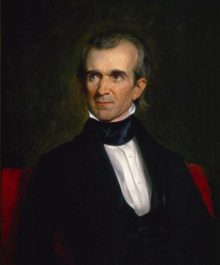
President James K. Polk


In his war message to Congress, Polk states that even though they have made efforts to resolve the conflict peacefully, the Mexicans would not cooperate and eventually invaded American territory. This was due to the leader of the government changing to a military leader after General Herrera had surrendered to rebel forces, with the new leader, General Paredes, refusing to see the American envoy. Because Mexico had threatened invasion when Texas annexed itself to the U.S., protection was given to it. Troops were later moved to protect the area near the Del Norte river, the border between Texas and Mexico. Mexican forces at nearby Matamoras demanded that the camp be broken up and troops moved back over the Nueces river, the border that was established before the land there was annexed to the U.S. as part of Texan territory. A group of 63 members of the U.S. Army went to the river to see if the Mexican forces were attempting to cross the border, where they were surrounded and had to surrender. Polk argues that these issues had gone on long enough without anything done about them and finishes by stating that because Americans were killed on their own soil, the United States was justified in going to war and should see that the rights and interests of the U.S. are carried out.

LAD #11: Seneca Falls Declaration

A woman gives a speech at the Seneca Falls Convention

The Declaration issued at the Seneca Falls Convention in 1848 consisted of two parts: the Declaration of Sentiments, and Resolutions. The Declaration of Sentiments was structured after the Declaration of Independence, with key differences being "all men and women are created equal", resolving one of the issues from the original Declaration, and listing the "repeated injuries and usurpations" faced by women over the years, including the powerlessness of a married woman to her husband and the restrictions placed upon women in the areas of voting, education, employment, and religion. The Resolutions state that laws that make men and women are not intended by nature or God, and should be corrected, as well as saying that men and women should be treated the same both by laws and by social norms. They also elaborate on how women should achieve equality in all spheres of life as they were both made with the same capabilities and how men and women would need to cooperate to destroy the supremacy of men in everyday life.

Wednesday, October 29, 2014

LAD #10: The Monroe Doctrine

The Monroe Doctrine
 
 
1. What did the issuing of the Monroe Doctrine express from an American perspective post War of 1812?
 
After the War of 1812, increased feelings of nationalism led to more assertiveness regarding the territory of the Western Hemisphere. This was kind of arrogant because they hadn't won the war; it was a tie. Regardless, when the Monroe Doctrine was issued, the Americans believed that the European powers shouldn't make any further efforts to colonize or interfere with other countries in that area. They also felt that if there was action taken, it would be a threat the their security and the United States would have to intervene.
 
2. What was Secretary of State Adams' hope when he wrote the Monroe Doctrine?
 
Adams wanted to prove that the United States wasn't going to let itself get pushed around, directly or indirectly, by the European powers. He also hoped that it would make clear America's position on further colonization, which helped to cement its foreign policy.
 
3. What is the key phrase in the entire document that you need to remember as the cornerstone of American foreign policy?
 
"It is only when our rights are invaded or seriously menaced that we resent injuries or make preparation for our defense." This quote shows that the United States is generally neutral to other countries' affairs, and only takes action if it's a threat to American peace and security.


Sunday, October 12, 2014

Columbus Blog #8

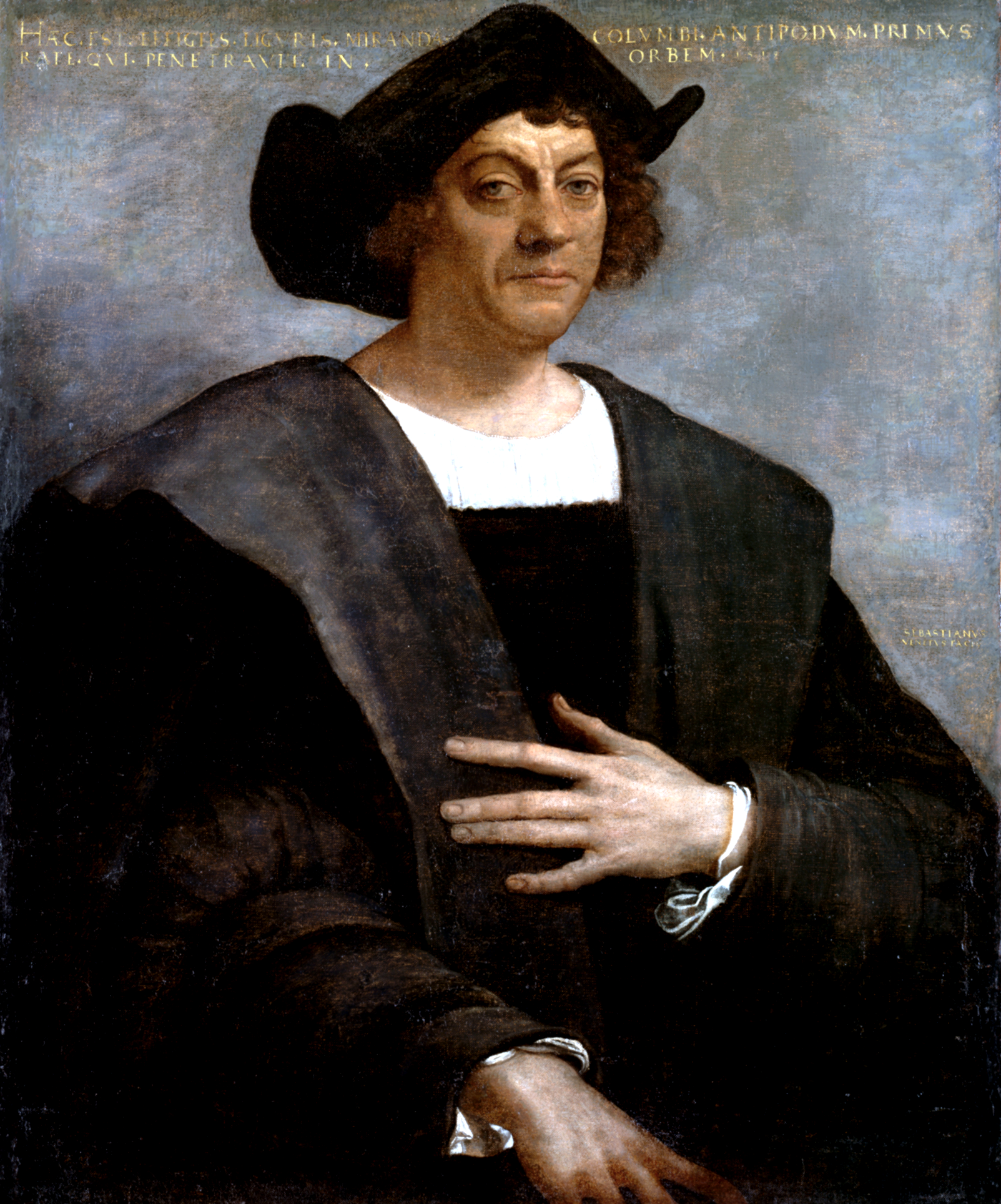
Christopher Columbus

I think that Columbus should be considered more of a villain than a hero, based on his actions. He is often attributed to being the one who first discovered America (he wasn't), but even this discovery was a mistake. He was trying to find a quicker route to get to Asia in order to trade more efficiently, but accidentally stumbled upon the Americas. He then exploited the native people living there for other countries' gain, including enslaving and killing them, which eventually led to the almost complete eradication of the native people's culture when more conquistadors arrived.

LAD #9: Jefferson's 1st Inaugural Address

Jefferson's 1st Inaugural Address

He opens his address by thanking those who helped him get there, and saying how he looks forward to collaborating with the legislature. Jefferson then states that in spite of conflicting opinions, people will follow the law and contribute to the common good due to the Constitution. He says that even though the will of the majority rules, the minority will have equal rights, also claiming that even if religious intoleration has been eliminated, it would still be just as bad if there was also political intoleration. Jefferson strongly believes that people are free to have their own opinions. He then goes on to say that a "wise and frugal government" is the only thing not present in people's lives. Jefferson also lists qualities that he finds most essential to the United States government, including "exact and equal" justice, friendship (but no alliances) with foreign nations, the supremacy of the majority"s will, and the freedoms of religion and press, stating that these principles have helped to guide the nation to where it is. Lastly, Jefferson mentions how proud he is to take on the role of President and asks the public to forgive his errors that he might make while in office.