Wednesday, December 10, 2014

LAD #21: Carnegie's Gospel of Wealth

Andrew Carnegie

Carnegie states that the problem of his day is the administration of wealth, and the new differences between the rich and poor should be celebrated rather than despised because it's better that the rich have more than nobody have anything, or civilization would collapse. He then answers the question: what's the right way to administer wealth? He defines the three ways to administer wealth (giving it to descendants, donating it to the public upon death, or using it throughout the owner's lifetime), stating the first to be not useful as the value of land falls or is lost and generally causes more harm than good. The second method can only be used for disposing of wealth and usually doesn't lead to the goals the person wants during their lifetime as it takes a while for the money left to make an impact. Carnegie does say that it's becoming more common that large estates are taxed after their owners' deaths, which is a good way to redistribute the funds to the public instead of being hoarded by someone else. This also leads to businessmen being more likely to use their money in their lifetime where it can be the most beneficial to all people. He further claims that this third way of administering wealth is the solution for all the temporary inequality in wealth between the rich and the poor, since it running through the hands of the wealthy few first and then later becoming the property of many has a much greater effect than giving the poor small amounts of money individually. He describes the duties of a man of wealth as living a modest, unostentatious life and then distributing surplus money through the population which will eventually better society as a whole.

Sunday, November 30, 2014

LAD #20: Emancipation Proclamation

The Emancipation Proclamation

The Emancipation Proclamation refers to another date (September 22, 1862) in which Abraham Lincoln announced that he would free the slaves in the rebellious states or parts of states of the South on January 1, 1863, and that the Executive Government would support their freedom. Lincoln then listed the territories in which the Emancipation Proclamation was due to take place, which was most of the South but not the "border states", and asserted that the Government, including the army and navy, would uphold the document. He ends by warning the newly freed slaves not to resort to violence, and invited any of them to join the military of the Union.

LAD #19: Lincoln's 2nd Inaugural Address

Lincoln giving his Second Inaugural Address

Lincoln starts this address by saying that, unlike his 1st, there was no need for an extended speech this time. He talks briefly about the Civil War at the time 4 years ago, saying how then everyone sought to avoid it although it eventually happened anyway to determine how the Union would be afterwards- that some people would prefer war over keeping the country in one piece, though nobody expected it to go on for that long. He affirms his beliefs that the Federal Government had no power to stop slavery, only the power to stop its expansion, and that's ultimately what the war became about. He also expresses his wish that the war would quickly come to a close, and that everyone should try to fix the wounds in the nation and make an effort to keep the country united through times of war.

Wednesday, November 19, 2014

LAD #18: Dred Scott Decision

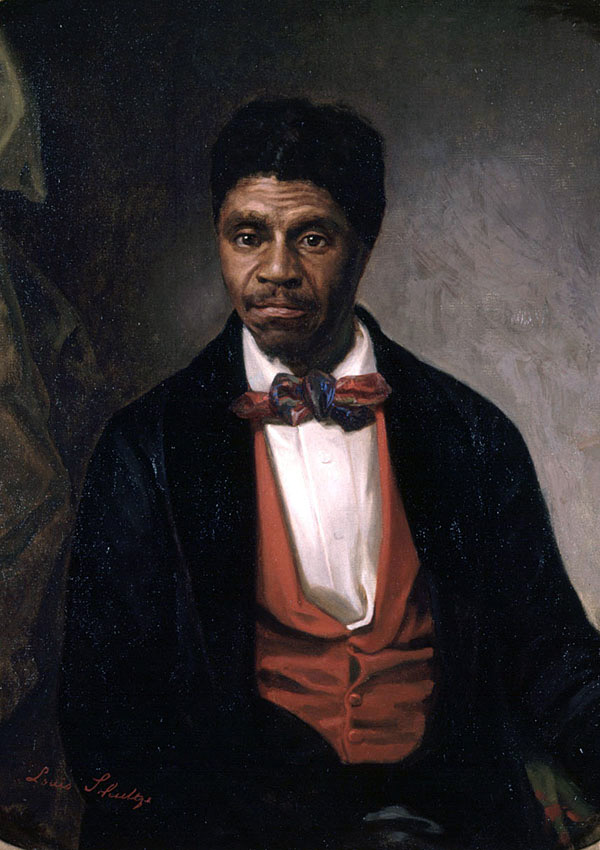
Dred Scott


The controversial Scott v. Sandford case of 1857 arose when Dred Scott crossed from a slave state into a free state, wanting to be free from slavery. Chief Justice Roger Taney was chosen to represent the majority opinion of the Court. The new President, Buchanan, contacted some people he knew in the Supreme Court and asked what side he should support in his inaugural address. He ended up saying that he would support the decision of the Supreme Court, whatever it was going to be. Taney dismissed the case in the end, saying that even free black people weren't truly citizens of the United States and therefore were unable to sue in court. Furthermore, he said that he couldn't declare Scott free because slaves counted as property, and it was unconstitutional to take away someone's property without due process. This led him to determine that the Missouri Compromise was also unconstitutional, as it limited slavery and therefore limited property. The dismissal of the case upheld the state of Missouri's ruling in favor of Sandford.

LAD #17: Ain't I A Woman?

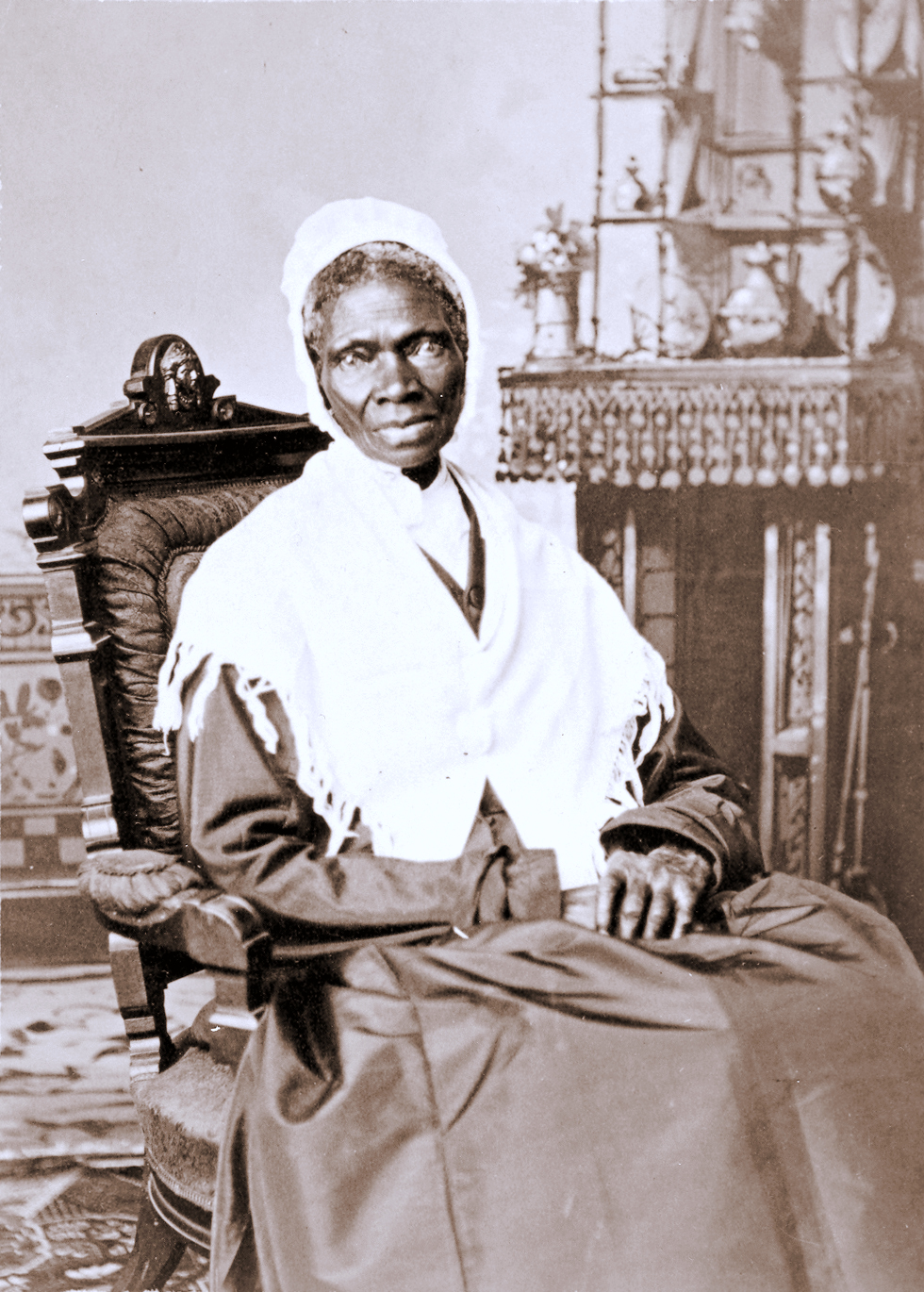
Sojourner Truth

Sojourner Truth, in this speech, addresses people's treatment of women. She called out their behavior when they say that women need to be helped everywhere and can't do the same things men can do, and saying that she was a woman too and yet nobody ever helped her, and she worked just as hard a man, and saw most of her children sold off to slavery, and led a hard life even though women weren't supposed to do that, according to some. Truth then devalues the argument of intellect proving that other groups shouldn't have equal rights, saying that has nothing to do with equality at all and shouldn't affect how well people are treated. She finishes by saying that if the first woman God made was strong enough to turn the world upside down, then the women of that day should be able to get together and fix it again.

LAD #16: 5th of July Speech

Frederick Douglass

In the beginning of his speech, Frederick Douglass asks if the principles of political freedom and natural justice apply to him as well. He states that the independence of the white people in the country only serves to highlight the differences between the groups, as the liberty, prosperity, justice, and independence they celebrate only applied to them. He also says that its hypocritical to not give these core principles to African-Americans and then ask one to speak on the Fourth of July, a day for celebrating all these things. If he just forgets about their struggles and joins in with the majority, he says, it would be the same as treason. Douglass denounces "everything that serves to perpetrate slavery" and America's denial of past and present situations. He affirms that, to a slave, the Fourth of July is an extreme reminder of the injustice they have to face, like it's mocking their situation while everyone is celebrating their freedom, and they don't have any. Douglass concludes with saying there is no other nation on Earth as hypocritical and cruel as the United States is on the Fourth of July.

Monday, November 17, 2014

LAD #15: The Gettysburg Address


Lincoln giving the Gettysburg Address
Lincoln begins the Gettysburg Address by saying that when the Founding Fathers made the country, they did so on the premise that "all men were created equal", but the country had become engaged in a civil war over that very issue. The Civil War, he said, was like a test to see how long the nation could endure. He then stated that the true importance of the gathering there was to honor the efforts of the fallen soldiers, and that the remaining living should carry on the goals of the dead and prevent the country from collapsing and disappearing.